Pigging technology for chemicals, paints and coatings
With paints, coatings and chemical products, both the residual quantity in the line and the flushing medium are often expensive. A pig pushes the product back before the line is flushed.
Questions we clarify first
- What is the value of the product that is currently flushed out?
- Which flushing media or solvents are used per changeover?
- Are there explosion protection requirements in the installation area?
- How resistant does the pig material need to be to the medium?
Typical media
- Paints and coatings
- Resins and binders
- Additives
- Cleaning agents and surfactants
Recovery and less flushing medium
With frequent colour and formulation changeovers, large quantities of flushing mixture are produced without a pig, and these have to be disposed of or reprocessed. With a pigging system, the line contents are recovered and the line is largely emptied before flushing.
The ROI calculator provides an initial estimate of whether this is economically worthwhile.
Particular requirements
- Material resistance: silicone is not resistant to every solvent. We check the suitability of the pig material for your medium.
- Explosion protection: if the installation site is in an Ex zone, this is taken into account for actuators, sensors and the propellant.
- Propellant: for flammable media, nitrogen can be used instead of compressed air, for example.
Frequently used components
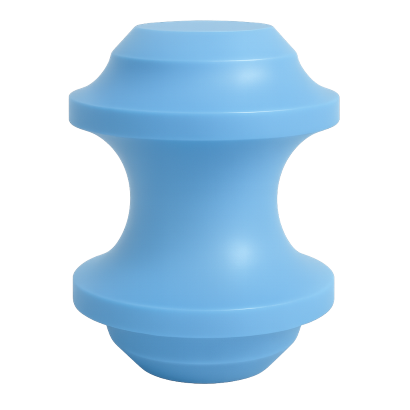 2-stage segmented pigTwo flexible sealing lips rest against the pipe wall and wipe off the product. A widely used design for product changeovers and recovery.
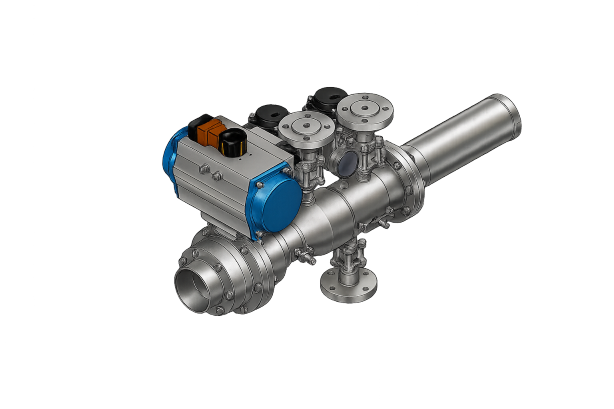 Pig launcherThis is where the pigging operation starts in the conveying direction. The launching station holds the pig, is closed pressure-tight and sends it into the line with the propellant.
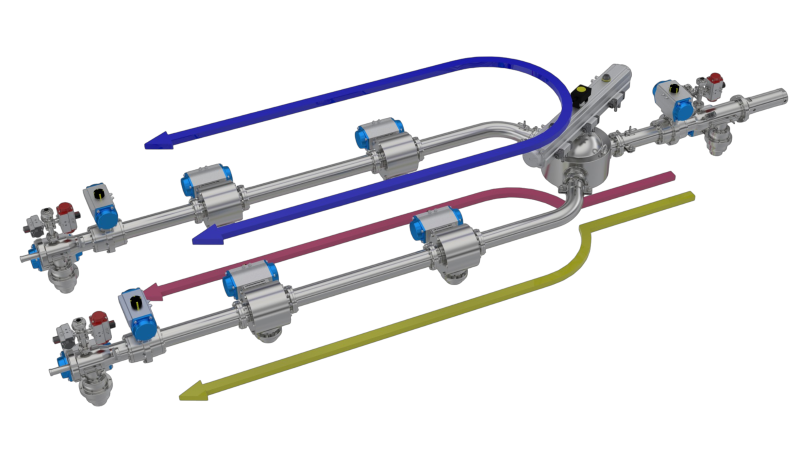 Accessories and controlPipe components, propellant control, control heads
Discuss your application
Send us details of the medium and the pipeline, ideally with a sketch, or give us a call. We will get back to you with an initial technical assessment and tell you which details are still needed for the design.