Pigging technology for cosmetics
Creams and gels adhere to the pipe wall, and formulations and colours change frequently. With a pigging system, less product remains in the line and changeovers become easier to plan.
Questions we clarify first
- How often do formulation or colour change on the same line?
- How strongly does the product adhere to the pipe wall?
- Does the line lead to one or to several filling machines?
- What requirements apply to materials and cleaning?
Typical media
- Creams and lotions
- Shampoos and shower gels
- Gels and pastes
- Emulsions
Typical task: from the mixing vessel to filling
Many cosmetic products are made in a mixing vessel and conveyed through relatively long lines to filling. After filling, a considerable amount of product still remains in the line. Without a pig, it is lost during flushing at the formulation changeover.
A pigging system pushes these contents to the filling machine or back into the vessel. With a pig diverter, several destinations can also be served.
What needs to be clarified for the design
- Viscosity and shear sensitivity of the product
- Number of destinations and line routes
- Cleaning concept and cleaning media used
- Resistance of the pig material to ingredients such as oils, surfactants or fragrances
- Required degree of automation and interfaces to the existing control system
Frequently used components
 3-stage segmented pigThree sealing lips form three wiping edges one behind the other. For applications in which as little product as possible should remain in the line.
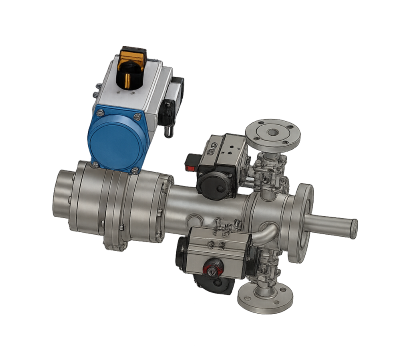 Pig receiverAt the end of the pigging line, the receiving station, also known as the catching station, takes up the pig, signals its arrival and allows depressurised removal.
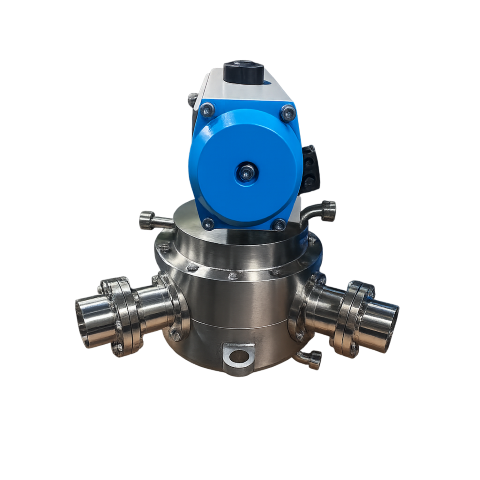 Pig divertersSwitching between pipeline routes
Discuss your application
Send us details of the medium and the pipeline, ideally with a sketch, or give us a call. We will get back to you with an initial technical assessment and tell you which details are still needed for the design.