
Pig receiver
At the end of the pigging line, the receiving station, also known as the catching station, takes up the pig, signals its arrival and allows depressurised removal.
- Function
- Receiving, detecting and removing the pig
- Material
- Stainless steel
- Nominal sizes
- DN 25 to DN 125
- Pig detection
- integrated pig detectors
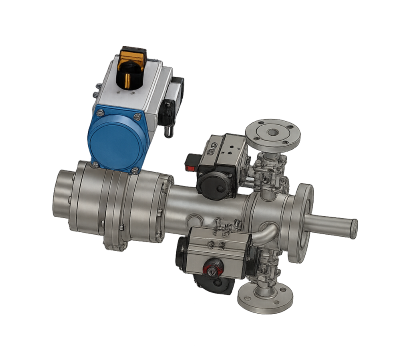
What does the pig receiver do?
The pig receiver catches the pig after discharge. Detectors register its arrival and give the control system the signal for the next steps, for example closing the destination valve.
After depressurisation, the pig can be removed without pressure or kept ready for the return run. We also manufacture the receiving stations ourselves.
Applications
- End point of pigging lines
- Return of the pig to the launching station
- Plants with automatic pig detection
Equipment according to application
Pig detection
Integrated pig detectors for determining the pig position.
Visual inspection
Versions with sight glass by agreement.
End position detection
Feedback of valve and pig end positions to the control system.
Automation
From manual operation to fully automatic control.
Technical data
Values that depend on the medium, temperature and mode of operation are defined for your plant. Suitability depends on the specific system and its operating conditions.
Connections and interfaces
- Product outlet to the destination
- Venting or depressurisation of the propellant
- Pig detectors and valve feedback to the control system
- Cleaning circuit, if provided
| Feature | Specification |
|---|---|
| Function | Receiving, detecting and removing the pig |
| Material | Stainless steelMaterial number and surfaces according to project |
| Nominal sizes | DN 25 to DN 125 |
| Pig detection | integrated pig detectors |
| Pressure, temperature | project-specific |
| Cleaning | Integration into plant cleaningCleaning processes and verification are defined on a project-specific basis |
What matters when selecting
We clarify these points with you before defining a design. A complete checklist is available in the article Information required for design.
- Product destinationWhere is the product discharged to: into a tank, to filling or into a return line? Outlets and valves are designed accordingly.
- Return runShould the pig return automatically to the launching station? Then the station needs a second propellant connection.
- DepressurisationHow is the propellant discharged, and is a separator required?
- SensorsWhat feedback does the control system expect, and where are the detectors located?
Documents on request
We compile documents on a project-specific basis. Let us know in your enquiry what you need.
- Quotation drawing or dimensional sketch
- Functional description for the control system
- Material certificates as agreed
Matching components
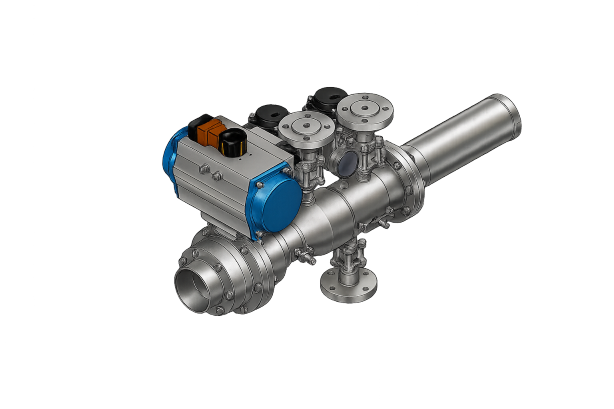 Pig launcherThis is where the pigging operation starts in the conveying direction. The launching station holds the pig, is closed pressure-tight and sends it into the line with the propellant.
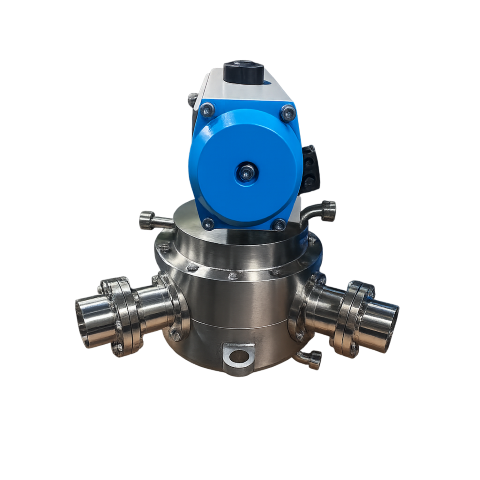 Pig divertersSwitching between pipeline routes
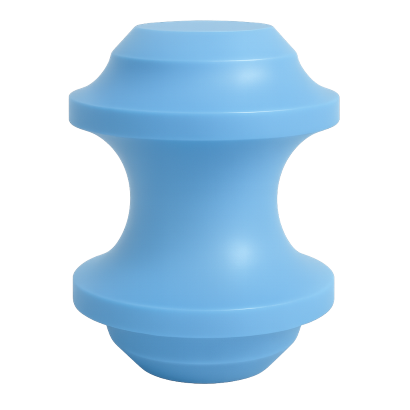 2-stage segmented pigTwo flexible sealing lips rest against the pipe wall and wipe off the product. A widely used design for product changeovers and recovery.
Frequently asked questions about the pig receiver
Is a pig catching station the same as a pig receiving station?
Yes. Both terms refer to the station at the end of the pigging line that takes up the pig.
How does the plant detect that the pig has arrived?
Via pig detectors on the station. They register a pig with a detection insert (version M or MK) and send a signal to the control system.
Enquire about a pig receiver for your plant
Tell us the medium, pipe data and mode of operation. The enquiry form already includes the product.